If you’ve ever stood on a pump station floor mid-shift, or watched a process line grind to a halt because of a small, unassuming part, you know how much ball valves carry in industrial operations. As someone who’s spent 12 years selling, troubleshooting, and standing behind ball valves—first on the factory floor building them, then working with operators to keep them running—I’ve seen that even these workhorse components fail, often in ways that surprise new engineers or maintenance teams. A few years back, a water treatment plant client called me at 2 a.m. because a brand-new ball valve on their main influent line had seized solid, dumping raw water into a storm drain for three hours. That’s when I learned that most ball valve failures aren’t random luck, nor are they caused by cheap “junk” parts—they’re avoidable, rooted in small design oversights, installation shortcuts, or lack of regular maintenance. Today, I want to break down the most common failures we see on the job, why they happen, and how you can avoid them so your operations run without those 2 a.m. fire drills. Ball Valves
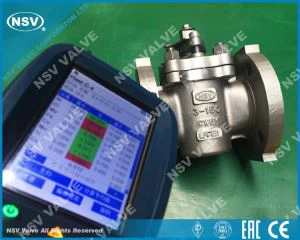
First, let’s start with the most frequent failure we field calls about: seat leakage, either internal (where media slips past the ball into the closed side of the valve) or external (where fluid seeps out around the valve stem or body joints). I can’t tell you how many times I’ve shown up to a site and heard, “We got a quality valve from X supplier, why is this leaking already?” The answer rarely boils down to a bad valve, but instead to two missteps: incompatible seat materials and over-torquing during installation. Seats are the soft, plastic (usually PTFE, RPTFE, or EPDM) ring that sits between the ball and the valve body to create a tight seal when the valve is closed. I once worked with a chemical processor who replaced a standard PTFE ball valve on their 180°F acidic bleach line with the same valve from our catalog, but without mentioning the application. PTFE works great for water or mild acids, but bleach at that temperature eats through it in six months, leaving tiny gaps that let media seep past. We fixed that by swapping in a valve with a Kynar-lined seat, rated for high-temperature oxidizers, and that line’s been leak-free for four years now. The other seat killer I see is over-torquing, which happens when installers crank down on the valve’s actuator or handle too hard to “make sure it seals.” PTFE seats are soft—over-torquing squishes them into irregular shapes, or even causes small cracks that show up weeks or months later, once the valve cycles a few times. Last quarter, we pulled a failed valve from a food and beverage brewery where the maintenance team had used an impact wrench to tighten the valve’s flange bolts; the seat was so deformed that it wouldn’t seal even when the actuator was only half-stroked. Internal seat leakage might not sound like a big deal, but in closed-loop systems, that’s unaccounted-for media that throws off process pH or pressure, and in lines handling hazardous materials, it’s a safety risk waiting to happen.
Next, stem sealing failure and external leakage go hand-in-hand, and this is another issue that’s often traced back to installation, not the valve itself. The valve stem is the metal rod that sticks out of the valve body, connected to the ball, that you turn to open or close the valve. Around that stem is a set of packing rings—usually PTFE, graphite, or rubber—that create a seal to keep fluid from seeping out through the gap between the stem and body. Improper packing installation is the top cause of stem leaks, especially on large valves used in oil and gas or mining. I saw this at a pipeline pumping station two years ago; their 12-inch ball valve had a small drip coming from the stem every time it cycled. The maintenance team had cut the packing rings to custom length instead of using the pre-cut, sized rings our team supplies, and the gaps between the cut ends left a path for crude oil to seep out. They replaced the packing with our pre-cut sets, torqued the packing gland evenly (not too tight, not too loose—another mistake we see), and the drip stopped that same day. Extreme temperatures also eat at stem seals: on lines that carry superheated steam, standard PTFE packing breaks down in months, while on lines in Arctic climates, rubber packing cracks when the valve is cycled. We’ve had to adjust packing configurations for clients in both scenarios, and in every case, fixing that stem seal issue eliminated the external leak. What most people don’t realize is that even a small external stem leak can cause long-term damage: for example, a slow leak on a gas line can corrode the valve’s stem threads, leading to the valve seizing up completely when you need it most.
Then there’s valve seizing, which is the failure that brought that 2 a.m. water plant call to mind. Seizing falls into a few main categories, and most are preventable. The biggest cause of seized ball valves is debris and particulate media getting trapped between the ball and the seats or body cavity. Let’s say you have a ball valve on a wastewater line that’s handling grit or sediment from a storm sewer. Over time, small grit particles work their way into the valve’s cavity, and when you close or open the ball, they scratch both the ball surface and the seat. Those scratches create tiny ridges, and next thing you know, the ball won’t turn at all. We had a municipal water client where their ball valves on raw water intakes seized after a big rainstorm, because the intake line wasn’t fitted with a pre-filter that our team recommends. The grit had scratched the ball so badly that we had to replace four valves, but once we added the inline filters, we haven’t had a seized valve from that line in three years. Another less talked-about type of seizing is corrosion-induced seizing, which happens when the valve body is made of a material that doesn’t match the media it’s handling. For example, a brass ball valve on a saltwater line will corrode quickly—salt causes galvanic corrosion between the brass ball and the steel body, leaving rust deposits that weld the ball to the body. We once got a call from a seafood processing plant that had three ball valves seized on their chilled seawater lines; they’d bought cheap brass valves from a local supplier, not realizing that saltwater requires 316 stainless steel or a high-grade alloy. Swapping those for our 316 stainless valves fixed the issue, and they’ve been operating smoothly ever since. Seized valves are especially dangerous because when you need to close a valve during an emergency, you can’t—so seizing is never a problem you want to deal with when you’re fighting a leak or overpressure event.
Wait, I should also mention body cavity fouling, which is a close cousin of seizing but worth its own section, because it’s a failure that creeps up on you slowly, not suddenly. The body cavity is the hollow space inside the valve where the ball sits. When the valve is in the open position, media flows through that cavity, and if the media is thick, viscous, or has solids that settle, those materials can build up in the cavity over time. For example, in a line handling molasses, or slurry used in mining, molasses or fine ore particles will settle in the valve’s cavity, harden, and prevent the ball from rotating fully or sealing when closed. We had a concrete plant client that ran their 8-inch ball valve on their cement slurry line for two years without opening it, and when they finally cycled it to clear a blockage, the ball only turned 45 degrees—because the cavity was packed with dried cement slurry. The funny thing is, this failure is totally avoidable: if you cycle ball valves that handle viscous or slurry media at least once a month, even if they’re not in regular use, you keep that cavity from building up those deposits. I always tell clients: if your ball valve sits open for more than two weeks, spin it a quarter turn. It takes two minutes, and it saves you from a $1,500 valve replacement and a day of production downtime. Cavity fouling isn’t a failure that happens overnight, but it’s one that many maintenance teams overlook, because they only test valves when there’s a problem.
Another common failure I want to cover is actuator mismatch or failure, because a ball valve is only as good as its actuator—the motor, pneumatic, or hand-operated device that turns the ball. I’ve seen more ball valves get ruined not because of a problem with the valve itself, but because someone bought an actuator that’s too small for the valve, or rated for a different pressure. For example, a 4-inch ball valve used for high-pressure gas needs an actuator that can generate enough torque to turn the ball against the pressure of the media inside. If you put an actuator rated for low-pressure water on that gas valve, it won’t generate enough torque, and the valve will either only half-close (leading to leakage) or burn out the actuator motor trying to turn. We had a natural gas processing client a few years ago that did exactly that; their new 6-inch ball valve came with a generic actuator from their old supplier, and within three months, the actuator motor had burned out because it couldn’t handle the line’s 150 PSI pressure. We swapped it for a high-torque actuator specifically rated for gas service, and that’s still running. Even hand-operated valves can fail because of undersized actuators: if you use a small handle to turn a large valve, it’s easy to strip the stem’s internal threads, which means you can’t turn the valve at all. I always work with clients to size both the valve and the actuator as a matched system, not as two separate parts—because buying a cheap actuator to save a few bucks will cost you way more in downtime later.
Now, I know what some of you are thinking: “All this sounds like I just need to buy the most expensive ball valves on the market, right?” Not at all. The key to avoiding these common failures is three things: matching the valve to your application, following proper installation procedures, and staying on top of basic maintenance. As a ball valve supplier, my job isn’t just to sell you a valve—it’s to help you pick the right one, install it correctly, and keep it running for as long as possible. I’ve seen clients save thousands of dollars by spending a little extra time up front to get the right material and seat, instead of cutting corners on price and paying for repairs. A chemical plant I work with used to replace ball valves every six months because they’d use standard PTFE seats on their acid lines; once we recommended a higher-grade fluorocarbon seat that’s rated for their specific acid concentration, those same valves have now been running for three years with zero leaks.

If you’re dealing with repeated ball valve failures on your lines, or just want to make sure your next valve purchase is the right fit for your operations, reach out to our team to talk through your needs. We’ve worked with municipalities, chemical processors, water treatment plants, and industrial facilities of all sizes, so we know how to match ball valves, seats, and actuators to handle your specific media, pressure, and temperature requirements. Don’t wait for that 2 a.m. call that throws your whole schedule off—let’s talk before a small problem becomes a costly emergency.
Titanium Alloy Valves References
- Valve Technology: A Practical Guide for the Process Industries, American Society of Mechanical Engineers, 2018.
- Ball Valve Failure Modes, Causes, and Mitigation Strategies, International Society of Automation, 2020.
- Material Selection Guide for Industrial Valves, Pump Industry Association, 2019.
- Maintenance Best Practices for Ball Valves in Municipal Water Systems, National Rural Water Association, 2021.
NSV Valve Corporation
NSV Valve Corporation is one of the most professional ball valves manufacturers and suppliers in China, featured by quality products and good service. Please rest assured to buy ball valves made in China here from our factory.
Address: Puyi Road,Sanqiao Industrial Zone, Oubei Street, Yongjia County,Zhejiang,China
E-mail: info@nsvvalve.com
WebSite: https://www.nsvvalves.com/
