If you’ve ever walked past a section of a retail store with airtight, durable plastic blister packs holding toys, or grabbed a water bottle with a shatterproof, seamless seam that doesn’t leak, you’ve held in your hand a product made with high-frequency (HF) welding. As a supplier of industrial HF welding machines, I get asked this question at least twice a day: Can an HF welding machine be used for welding plastics? The short answer is yes—but the longer, more accurate answer is that it depends on the type of plastic, the machine settings, and the application. I’ve spent 12 years working with HF technology, helping small custom manufacturers and large consumer goods brands upgrade their assembly lines, so let me break this down without the overly technical jargon that muddles a lot of online explanations. HF Welding Machine
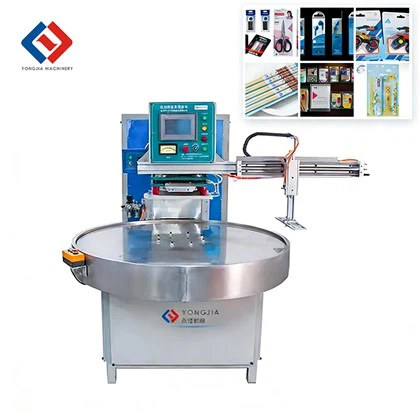
First, let’s start with what HF welding actually does, because that’s the foundation of why it works (and doesn’t work) for plastics. Unlike other welding methods that use heat from a torch, an iron, or ultrasonic vibrations, HF welding uses high-frequency electromagnetic energy—usually between 13.56 MHz and 27.12 MHz, the frequencies regulated globally for industrial use to avoid interfering with radio signals. When you apply that energy to certain plastics, the molecules in the material act like tiny dipoles: they flip back and forth rapidly as the electromagnetic field changes. That rapid movement generates friction, which turns into heat inside the plastic itself, not just on the surface. That’s a key detail that makes HF welding different from, say, heating two plastic sheets with a heat gun and pressing them together; the heat is consistent throughout the seam, not just the outer layer, so the weld is stronger and more uniform, with no risk of the surface melting too fast and leaving bubbles or gaps.
Now, the critical part: not all plastics respond to this electromagnetic energy the same way. HF welding only works on polar plastics. Polar plastics have molecules with an uneven charge distribution—one end of the molecule is slightly positive, the other slightly negative. That’s what makes them align with and vibrate in an HF field. The most common and most weldable polar plastic is polyvinyl chloride (PVC). You’ll find PVC in everything from inflatable pool toys and medical IV bags to truck tarps and vinyl upholstery. I’ve seen our standard HF welders handle a 10-foot roll of 20-gauge PVC in 10 minutes, creating airtight seams that hold up to 15 PSI of pressure—way more than a typical heat-sealed seam could manage.
Other polar plastics that work well with HF welding include polyurethane (PU), which is used for shoe soles, laptop cases, and medical tubing; nylon, though it requires slightly higher power settings than PVC; and ethylene vinyl acetate (EVA), common in shoe insoles and packaging. The big exception here is non-polar plastics, like polyethylene (PE) and polypropylene (PP). These have evenly charged molecules, so they don’t vibrate in an HF field at all. If you try to use a standard HF welder on PE or PP, nothing happens—you might get a tiny bit of surface heat, but no internal friction, so no permanent bond. I’ve had customers call me frustrated after testing this, saying “the machine won’t weld PE” and realizing they need a different technology, like ultrasonic welding or hot plate welding, for those materials. That’s a common mix-up, and part of my job is making sure clients don’t waste time and money buying the wrong equipment for their plastic type.
Once you confirm you’re working with a polar plastic, there are a few more factors that determine if an HF welder will work for your specific application, beyond just material type. The first is material thickness. HF welders work best on plastics between 0.1mm and 10mm. Too thin (like a thin plastic bag liner) and the energy will burn through the material before it can create a solid seam; too thick (like a 2-inch thick PE block, though again, that’s non-polar anyway) and the energy won’t penetrate all the way to the middle. I once worked with a client making custom PVC watch bands that were 8mm thick—we had to upgrade their standard 2kW welder to a 5kW model with a larger electrode to ensure the HF energy reached the core of the band, so the seam didn’t peel after a few uses.
Next, the electrode design matters a lot. The electrode is the part of the welder that applies the HF field and shapes the seam. For a simple straight seam on a pool liner, you can use a flat, straight electrode. For a complex shape, like a custom logo on a promotional PVC water bottle, you need a machined electrode that matches the exact shape of the seam, so the energy is applied only where you want it, leaving the rest of the product intact. I always tell new clients that taking the time to design the right electrode upfront saves way more time and money later than trying to use a one-size-fits-all part. We even offer custom electrode machining as part of our equipment packages, because I’ve seen too many manufacturers skip that step and end up with uneven, weak welds that cost them in product returns.
Another key factor is the application’s requirements. If you’re making a one-off prototype of a plastic component, a low-power benchtop HF welder will work perfectly, and it’s much more affordable than a large, industrial unit. But if you’re running a high-volume production line of disposable medical IV bags, you need a fully automated HF welder that can weld 60 bags per minute, with precision controls to adjust pressure and energy in real time—any variation could lead to a bag leaking, which is a safety hazard for patients. I recently worked with a medical device startup that was using an ultrasonic welder for their IV bags, and they were having a 12% defect rate because the ultrasonic vibrations would damage the liquid inside the bags. Swapping to an HF welder cut their defect rate to less than 0.5% in the first week, because the heat is generated internally without the same harsh vibrations.
Now, let’s address a common question: how does HF welding compare to other plastic welding methods, to help you decide if it’s the right fit. Ultrasonic welding is popular for small, rigid plastic parts, like toy pieces or electronic housings, but it doesn’t work as well for large, flexible sheets. Hot plate welding works for thick parts, but it can leave uneven seams and takes longer than HF welding. Adhesive bonding is an option for almost all plastics, but it’s messy, requires curing time, and is not as strong as a welded seam. HF welding stands out for flexible polar plastics, especially when you need airtight, watertight seams that can withstand repeated use or exposure to chemicals. It’s also much faster than adhesive bonding—most HF welds take between 1 and 10 seconds, depending on thickness.
But that doesn’t mean HF welding is the only or best option for every plastic welding job. For example, if you’re working with PP or PE, HF welding won’t work, as I mentioned earlier. If you’re making a small, rigid plastic gear, ultrasonic welding is probably a better, more cost-effective choice. I always start our consultations by asking clients two questions: what type of plastic are you using, and what is the product’s intended use? That way, I can recommend the right equipment, or if HF isn’t the right fit, guide them to another solution that will work better for their needs.
As a supplier, I don’t just sell a machine and disappear. I’ve seen way too many industrial equipment suppliers do that, leaving clients to figure out setup and operation on their own, which leads to bad welds and frustration. When a client buys an HF welder from us, we provide full training for their operators, including hands-on practice adjusting settings, designing custom electrodes, and troubleshooting common issues like burned seams or weak bonds. We also offer ongoing support, because even with the best machine, operators sometimes run into problems—whether it’s a damaged electrode that needs replacement, or a new material that requires adjusting energy levels. Last month, a client in the textile industry was using our HF welder to create waterproof PVC rain gear, and they started working with a new grade of PVC that was thinner than what they’d used before. They called us on a Friday evening, and our technician walked them through adjusting the energy and pressure settings over the phone, so they could keep their production run going over the weekend. That’s the kind of support you don’t get from a big-box industrial supply store.
Now, I want to make sure there’s no confusion about what HF welding can’t do. It will not weld non-polar plastics (PE, PP, polystyrene in most cases) effectively, no matter how much you adjust the settings. It also doesn’t work well for plastics with high filler content, like some reinforced PVC, because the fillers can disrupt the electromagnetic field and prevent the molecules from vibrating. And it’s not ideal for products that need to stay transparent after welding—HF welding can sometimes leave a slight haze on thin plastic, though that’s negligible for most applications like inflatables or packaging.
If you’re a manufacturer looking to upgrade your plastic assembly process, or a small business owner testing a new product that uses flexible plastic, the first step is to confirm two things: your plastic is polar (PVC, PU, nylon, EVA are all safe bets), and your application needs a watertight, airtight, or high-strength seam that’s durable. If both check out, an HF welding machine is absolutely a great investment—faster, more reliable, and more consistent than heat sealing or adhesive bonding for the right materials.
I’ve spent years perfecting our HF welding machines, adjusting power outputs and control settings to meet the needs of everything from custom sign makers to national medical brands. I’ve seen our equipment help startups launch products that wouldn’t have been possible with older welding methods, and I’ve helped large brands cut production costs by 30% by switching to HF welding for their assembly lines. It’s not a one-size-fits-all solution, but when it’s the right tool for the job, it’s one of the most efficient and reliable plastic welding technologies available.

If you’re ready to learn more about whether an HF welding machine is right for your plastic welding needs, or if you have questions about equipment types, electrode design, or pricing, our team is here to help. We can send you test samples to run on our demo machines, so you can see exactly how your plastic welds perform before you make a purchase. We don’t push one-size-fits-all solutions—we work with you to find the equipment that fits your production volume, material type, and product requirements. Reach out to our team to schedule a consultation today.
Fully Automatic Production Line References
- Harper, C. A. (2002). Handbook of Plastics, Elastomers, and Composites. McGraw-Hill.
- Technical Association of the Plastics Industry. (2019). Industrial Plastic Welding Technologies: A Guide for Manufacturers. TAPPI Press.
- International Electrotechnical Commission. (2021). Standard for High-Frequency Welding Equipment for Industrial Applications. IEC 60601-2-2.
Dongguan Yongjia Machinery Equipment Co., Ltd.
We are one of the most reliable hf welding machine manufacturers and suppliers in China, specialized in providing high quality customized service. Please feel free to wholesale advanced hf welding machine at low price from our factory. For quotation, contact us now.
Address: No. 240, Chashan South Road, Chashan Town, Dongguan City, Guangdong Province, China
E-mail: info@yjwelding.com
WebSite: https://www.yjhighfrequencymachine.com/
