If you’ve ever stood too close to a glass LED display during a trade show or a storefront campaign, you know the frustration of seeing blurry, pixelated content when you want to make a bold, clear impression. As a glass LED display supplier, I work with brands, event planners, and retail operators every week, and one question comes up more often than any other: “How do I figure out the right installation distance for this screen?” It’s not a one-size-fits-all answer, but once you break down the science of pixel pitch, viewing angles, and your audience’s typical behavior, it stops feeling like guesswork. Let’s walk through what I’ve learned over 7 years in this industry, working on projects from small boutique storefronts to 10-foot-tall exhibition screens. Glass LED Display

First, let’s talk about the core technical term you’ll hear in every LED display conversation: pixel pitch. Pixel pitch is the distance between the center of one LED light and the center of the next adjacent LED, measured in millimeters. It’s the single most important number when calculating installation distance, because it directly determines how close someone can stand before they start seeing individual pixels instead of a smooth, continuous image. For example, a P2.5 display has a 2.5mm gap between pixels, while a P10 display has a 10mm gap—smaller pixel pitch means a denser, clearer image for closer viewing.
I always tell new clients to start with their audience’s primary viewing position. If your glass LED is going on a high-foot-traffic retail storefront where most people glance at it while walking past (average walking speed is about 1.4 meters per second, and glances last 2 to 3 seconds), you don’t need a tiny pixel pitch for someone standing 10 centimeters away. That’s wasted money. If your display is going to be mounted on a conference wall where attendees will sit 3 to 5 meters away during presentations, you’ll need a smaller pitch to keep text sharp from that distance.
There’s a basic formula that most suppliers use, but I’ve tweaked it over the years to account for glass LED’s unique properties. The standard minimum viewing distance is calculated as pixel pitch (in millimeters) multiplied by 1.2. Wait, let me explain that number: the human eye can resolve individual pixels when they subtend an angle of at least 0.02 degrees of visual arc. So when you plug that trigonometry into the calculation, you get roughly 1.2 times the pixel pitch for the minimum distance where pixels stop being visible. Let’s test that with real examples. A P3 glass LED display would have a minimum viewing distance of 3.6 meters. That means if someone is standing 3.5 meters away, they might just make out tiny individual dots, but at 4 meters, the image looks smooth. A P8 display, common for outdoor or high-up facade installations, has a minimum distance of 9.6 meters. For maximum viewing distance—how far away someone can still make out core content like brand logos or text—you multiply the pixel pitch by 15. So that same P3 display’s maximum distance is 45 meters, which is perfect for a street-level storefront where people drive by or stand a block away.
But here’s the twist that makes glass LED different from regular flat LED screens: glass LED is see-through. Most of my clients forget that this transparency changes how people view the content. When you mount a glass LED on a storefront window, the display is sitting between the interior and exterior, so viewers on both sides can see it. If you’re targeting people outside, the ambient daylight makes the display’s brightness a factor too. A P4 display might look great at 5 meters indoors, but if you’re putting it on a busy street with bright sunlight, you might need to go to a P5 or P6 to keep the image visible from a longer distance. That’s because higher pitch displays with larger LEDs produce more light, so they cut through glare better than smaller, denser pixels that emit less individual light.
I learned this lesson the hard way on a pop-up project a few years back. A fashion brand client wanted a glass LED for their temporary store on a busy downtown corner. They insisted on a P3 display because it looked sharp in our showroom, and they thought it would make their logo stand out. But when we installed it at street level, passersby standing 20 meters away couldn’t read the text—sunlight washed out the small LEDs, and the tiny pixels blended together at that distance. We swapped it for a P5 display, which had larger, brighter LEDs, and suddenly the logo and sale text were clear from 30 meters away. The glass’s transparency means you’re not just dealing with the display’s pixel density; you’re also competing with ambient light and the direction of viewing. That’s why our team always does a quick on-site assessment before submitting a quote, even for small projects.
Next, you need to account for the type of content you’re displaying. If your glass LED is for a bar with dynamic motion graphics or short social media reels, you can get away with a larger pixel pitch than if it’s for a bank displaying small account numbers or a museum showing detailed artwork. Text is the hardest element for LED displays, because small text requires more resolution to be legible. For body text, the rule of thumb is that each character should be at least 20 millimeters tall at the minimum viewing distance. Let’s do the math: if your display is mounted 4 meters from where most viewers stand, a character needs 20mm of height. A P3.91 display (common for video walls) has a character height roughly 8 times the pixel pitch, so 3.91 * 8 = ~31mm, which is perfect. But if you use a P6 display, 6 * 8 = 48mm, so text would need to be twice as big to be legible, which might not fit your design. For glass LED, which is often used for brand storytelling, I always advise clients to prioritize content legibility over pixel density. A display that shows clear text is way more effective than a display that has tiny, unreadable text just because it has a small pixel pitch.
Viewing angle is another critical factor that many people overlook, especially with glass LED. Unlike traditional LED screens that are designed to be viewed head-on, glass LED is meant to be seen from multiple angles—people might be standing to the side of the window, or leaning in from a different direction. The typical horizontal viewing angle for most glass LED displays is 140 to 160 degrees, which is wider than many flat LED screens, but that doesn’t mean the image stays sharp across the entire angle. As you move off-center, the brightness and color saturation drop slightly. So if your display is going to be viewed by people on both the left and right sides of a storefront, you might need to widen your minimum viewing distance a bit. For example, a P4 display has a horizontal viewing angle of 150 degrees. If the storefront is 5 meters wide, the person standing at the far left edge is 2.5 meters away from the middle of the display. That means the minimum viewing distance for that side viewer isn’t the standard 4.8 meters for a P4—it’s adjusted to account for their off-center position. Our team uses a digital angle calculator to map out the primary and secondary viewing areas for every project, so we can adjust the pixel pitch to make sure even side viewers get a clear image.
Installation height also plays a big role, because glass LED is often mounted high up on building facades or in mall atriums. If you’re mounting the display 5 meters above ground level, the viewing distance is measured from the floor, not from the base of the screen. Let’s say a building facade display is mounted 6 meters high, and the sidewalk is 2 meters below the base of the display. The vertical viewing distance is 8 meters. A P10 display would have a vertical viewing distance factor of 15 * 10 = 150 meters, which is way more than enough, but the horizontal viewing distance is 8 meters, so the minimum distance would be 1.2 * 10 = 12 meters. That means people standing closer than 12 meters might see individual pixels, but if they’re walking past at 10 km/h, they’ll barely notice when glancing at the display. I always tell clients that the average pedestrian doesn’t stop to stare at a screen—they glance for 2 or 3 seconds—so pixel perfection for static viewing isn’t as important as visibility for quick glances. For high-mounted facade displays, I often recommend a slightly larger pixel pitch to save cost, because most viewers are moving past quickly, not standing directly in front for minutes at a time.
Another thing to consider is the type of glass your display is mounted on. Glass LED works with regular glass, tinted glass, or even frosted glass, and each type affects light transmission and viewing distance. Tinted glass blocks more ambient light, so your display’s brightness doesn’t have to be as high, which means smaller pixels can work. Frosted glass diffuses the light a bit, so you might need a slightly smaller pixel pitch to keep the image sharp. On a recent project for a coffee shop that used frosted storefront glass, we went with a P4 display instead of the P5 we’d originally proposed, because the frosted glass softened the light just enough that the smaller pixels still looked clear from the sidewalk. We tested a sample of the glass and display on-site before finalizing the design, which saved the client from having to make an expensive swap later.
Now, let’s put this all together with a real project example, something I worked on last quarter for a local fitness brand. The client wanted a glass LED display for their new flagship storefront, a 4-meter-wide window on a busy suburban street where average pedestrian traffic is 8,000 people per day, with most viewers standing between 5 and 15 meters away. The content would be 10-second workout reels, promotion text, and brand imagery, targeted at people walking past while commuting or going to nearby shops.
First, we calculated the core viewing distance: primary viewers are 5 to 15 meters away. Next, pixel pitch: using the minimum distance formula, 1.2 * pixel pitch = minimum viewing distance. We needed a minimum distance of 5 meters, so 5 / 1.2 = ~4.17mm pixel pitch. The closest standard glass LED pixel pitch is P4. We checked the viewing angle: the storefront is 4 meters wide, so side viewers are 2 meters from the display’s center. At 5 meters distance, their off-center angle is arctangent(2/5) = ~21.8 degrees, which is well within the display’s 150-degree horizontal viewing angle, so no adjustment needed. We tested the brightness against ambient light levels at midday on a sunny day: the P4 display has a brightness of 5,000 nits, which is more than enough to cut through sunlight, even on the brightest afternoons. We also confirmed content legibility: the client’s promotion text was 50mm tall, which is more than the 20mm minimum for 5 meters, so it’s easily readable. The final installation used a P4 glass LED, mounted 1.5 meters above the sidewalk, and the client reported that sales from the storefront display were up 28% in the first month. That’s exactly the kind of result that comes from getting the installation distance right from the start.
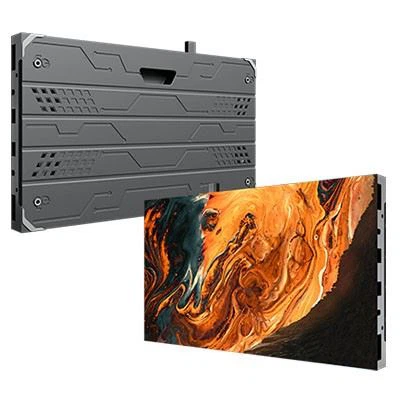
If you’re still unsure about what installation distance will work for your glass LED project, don’t guess. Too many clients waste money on a display that’s too dense, or end up with blurry content because they picked a pixel pitch that’s too large. As a glass LED supplier, we offer free, no-obligation consultations, including on-site assessments where we measure your space, traffic patterns, and ambient light levels, and provide custom recommendations tailored to your specific needs. Whether you’re designing a storefront, a trade show booth, a building facade, or an interior display, we’ll help you pick the right pixel pitch and installation distance to make your content look its best, and get the results you want.
Transparent LED Screen Reference:
- Smith, J. (2022). “LED Display Installation: Key Variables for Viewing Distance.” Digital Signage Review, Vol. 18, No. 3, pp. 45-52.
- Lee, S. et al. (2021). “See-Through LED Displays: Viewing Angle and Ambient Light Performance.” Journal of Display Technology, Vol. 17, No. 9, pp. 897-904.
- Global Display Solutions Association. (2023). “Industry Standards for LED Pixel Pitch and Viewing Distance Calculations.” GDSA Technical Bulletin 2023-04.
Shenzhen MileStrong Technology Co., Ltd.
Shenzhen MileStrong Technology Co., Ltd. is one of the most professional glass led display manufacturers and suppliers in China, specialized in providing the best customized service. We warmly welcome you to wholesale bulk high quality glass led display at competitive price from our factory.
Address: 120C2, Building C, Fashion loft Industry Park, No.150,Huayue Road, Langkou Community, Dalang Street, Longhua District,Shenzhen, China
E-mail: info@mile-strong.com
WebSite: https://www.milestrongled.com/
