If you’ve ever pulled a charger out to power your laptop, phone, or even a drill, you’ve interacted with a rectifier without even realizing it. These unassuming components live inside every power supply that turns alternating current (AC) from your wall outlet into direct current (DC)—the steady, consistent power that electronics need to run. As a rectifier supplier, I’ve spent years talking to engineers, maintenance teams, and small business owners who often underestimate how these devices shape energy use, utility bills, and even carbon footprints. Today, let’s break down exactly how a rectifier contributes to energy efficiency, why that matters for your operations, and what to look for when choosing the right one. Rectifer
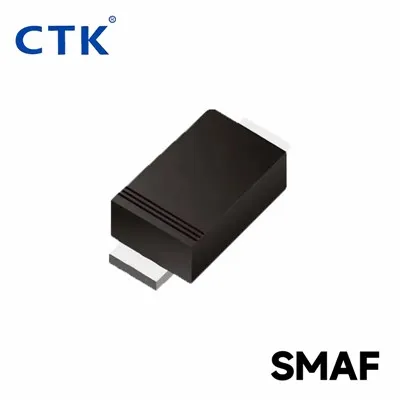
First, let’s start with the basics to ground this in science, no confusing jargon. AC power is what grids distribute because it’s easy to send over long distances with minimal energy loss. But almost every modern electronic device—from servers in a data center to a solar panel’s inverter to a commercial refrigeration unit—runs on DC. That gap is where rectifiers come in: their core job is to convert AC to DC, but the way they do that (and how well they do it) is what makes all the difference for efficiency.
Early rectifier designs, like the old tube-based units or even basic selenium rectifiers, were very inefficient. They wasted a lot of energy as heat during conversion—think leaving a laptop charger plugged in all day and feeling how warm the base gets. But today’s rectifiers, especially the ones we supply, use solid-state diodes (and more recently, silicon carbide or gallium nitride semiconductors) that cut that waste dramatically. For context, a poorly designed rectifier might only convert 85% of AC power to usable DC; a high-efficiency modern unit can hit 98% or more. That 13% difference might sound small, but it adds up fast.
Let’s put that into real numbers to make it tangible. A mid-sized retail store might have 10 refrigeration units, each with a 1000W rectifier. If those rectifiers are 85% efficient, they’re wasting 150W per unit, or 1.5kW total. Over a year, that’s 13,140 kWh of wasted energy—enough to power a typical home for over a month. If you upgrade to a 98% efficient rectifier, that waste drops to just 20W per unit, cutting annual waste to 1,752 kWh. For a data center, which might have hundreds or thousands of rectifiers powering servers, the savings are in the megawatt range. That’s not just lower utility bills; it’s less strain on the grid and fewer greenhouse gas emissions from power plants.
Another key way rectifiers boost energy efficiency is power factor correction (PFC). Wait, what’s power factor? Think of it as how effectively your rectifier uses the AC power coming into it. A low power factor means the rectifier is “wasting” AC power that doesn’t do useful work—it just cycles between the grid and the device, creating inefficiencies and even requiring the grid to carry more current than it needs to. Older rectifiers often had a power factor of 0.6 or lower, meaning only 60% of the AC power was actually used to create DC. Modern rectifiers—especially active PFC models, which we specialize in—have a power factor of 0.95 or higher, so almost all the AC power is converted to usable DC.
This is especially important for commercial and industrial settings. Many utilities charge extra for businesses with low power factors because of the extra strain they put on the grid. A factory with 50 rectifiers each at 0.7 power factor might see a 10-15% surcharge on their electric bill every month. Switching to high-power-factor rectifiers eliminates that surcharge, which is a direct efficiency gain. It’s a double win: you’re not wasting energy in conversion, and you’re not paying for wasted capacity the grid has to supply you.
We also work with a lot of renewable energy partners, and rectifiers are a critical link there too. Solar panels and wind turbines generate DC power, but when you’re storing that power in batteries or sending it to the grid, you need to convert it (or adjust it) properly. Wait, in that case, rectifiers are sometimes used for “boosting” DC power too—for example, when charging a battery from a solar array, the rectifier ensures the DC power is at the right voltage, so you don’t waste any energy as heat while charging. Without a high-efficiency rectifier, a solar system might lose 10-15% of its generated power during charging, which cuts your return on investment in solar by a similar amount. For small-scale solar installations on a home, that’s a few hundred dollars a year lost; for a utility-scale solar farm, that’s millions.
Now, let’s talk about a common misconception: rectifier efficiency only matters for new equipment. That’s not true. Many existing systems—old UPS (uninterruptible power supply) units, backup generators, or legacy industrial machinery—use outdated rectifiers that are dragging down overall efficiency. We’ve had customers who replaced a single 10-year-old rectifier in their UPS system and saw a 7% drop in their monthly electric bill, just from that one component. Why? Because old rectifiers degrade over time. Diodes can become less efficient, connections can corrode, and cooling systems (another part of rectifier design) can stop working as well, leading to more heat loss. So it’s not just about buying a new rectifier for new builds; retrofitting with a high-efficiency unit is a simple, low-cost upgrade that pays for itself in 12 to 18 months in most cases.
As a rectifier supplier, we also see how design features impact long-term efficiency. For example, modular rectifiers—units that can be added or removed as needed—are way more efficient than large, single-unit converters. Say you have a system that runs at 50% of its total capacity most of the time. A large single rectifier might run at 70% efficiency at that load, but if you have two modular rectifiers, you can run just one (which runs at 95% efficiency at 50% load) instead of the big one. That’s a huge gain. Modular units also make maintenance easier, so you’re less likely to have a component fail and waste energy when you need it most.
Another point: cooling efficiency. Rectifiers generate heat, and if that heat isn’t removed properly, the unit has to work harder to maintain its output, leading to more energy waste. Modern rectifiers use variable-speed cooling fans that adjust based on the unit’s load, instead of running at full speed all the time, which cuts cooling-related energy use by up to 20% compared to older fixed-speed designs. It’s a small part of the overall system, but it adds up over the life of the rectifier—usually 10 to 15 years.
We’ve seen this play out with a local manufacturing client a few years back. They had a 5-year-old production line with four rectifiers powering their assembly equipment. Their monthly electric bill was climbing, and they couldn’t figure out why. When we did an audit, we found their old rectifiers were only 82% efficient, and their cooling fans were running constantly, even when production was slow. We replaced the old units with our high-efficiency modular rectifiers with variable cooling, and their energy use dropped by 11%—saving them over $12,000 a year. That’s money they could put back into expanding their operations, hiring staff, or improving safety. It’s a clear example of how choosing the right rectifier isn’t just about component performance—it’s about bottom-line results.
Now, I know a lot of people reading this might be asking: how do I know if my rectifier is actually efficient, or if a new one is worth the investment? The key metrics to look for are efficiency at your typical load, power factor, and total harmonic distortion (THD). THD is a measure of how much the rectifier distorts the AC waveform, which can cause inefficiencies and even damage other equipment. High THD can lead to extra losses in wiring and other components, so looking for a rectifier with THD under 5% is a good rule of thumb for most commercial and industrial applications.
One thing we always emphasize to customers is that “generic” rectifiers might seem cheaper upfront, but they end up costing more over time. A $100 basic rectifier might waste $50 worth of energy every year, while a $150 high-efficiency unit might waste $10 worth of energy. That difference is a 12-month payback period, which is a no-brainer for most businesses. Plus, many regions offer energy efficiency incentives for upgrading components like rectifiers—so you might get a rebate from your utility company that covers a big part of the cost.
We also work with partners in the electric vehicle (EV) space, and rectifiers are critical there too. EV chargers use rectifiers to convert AC from the grid to DC to charge the vehicle’s battery. A more efficient rectifier means a faster charge and less energy wasted during charging. For a driver, that means less time plugged in and lower charging costs. For charging station operators, that means more revenue per charging station because they’re not wasting energy, and more satisfied customers. As EV adoption grows, efficient rectifiers will be even more important to reduce the strain on the grid from millions of chargers.
Let’s circle back to why this matters beyond individual bills. The U.S. Energy Information Administration (EIA) estimates that commercial and industrial buildings account for about 35% of total U.S. energy use. Rectifiers are a hidden part of that—they’re in almost every power supply in those buildings. If every commercial building upgraded their rectifiers to high-efficiency models, we could cut billions of kilowatt-hours of waste every year, which is the equivalent of taking millions of cars off the road. It’s a simple, actionable step to make energy use more sustainable.
As a rectifier supplier, our job isn’t just to sell parts—it’s to help our customers understand how these small components can make a big difference. We don’t push the most expensive unit; we work with each customer to match the rectifier to their specific needs: whether that’s a modular unit for a data center that scales with growth, a high-power-factor unit for a retail store looking to avoid utility surcharges, or a rugged unit for a factory with harsh operating conditions. We offer energy audits to show exactly how much a new rectifier will save them, so they can make an informed decision.
If you’re reading this and wondering if your current rectifiers are holding you back, or if you’re planning a new build and want to prioritize energy efficiency, we’re here to help. Every business has unique needs, and we can provide customized recommendations that fit your budget and goals. Whether you’re a small business owner looking to lower your monthly bills, a facilities manager updating your equipment, or an engineer designing a new renewable energy system, the right rectifier is a key part of a more efficient operation.

Don’t let hidden energy waste hold your business back. The benefits of efficient rectifiers add up fast, in lower bills, less maintenance, and a smaller environmental footprint. Reach out to us to discuss your needs and get a customized assessment of how our rectifiers can help you save energy and money.
Fast Recovery Diode References:
- U.S. Energy Information Administration. (2023). Commercial and Industrial Energy Use in the United States.
- International Electrotechnical Commission. (2022). Efficiency Standards for Power Rectifiers and Converters.
- Institute of Electrical and Electronics Engineers. (2021). Power Factor Correction in Solid-State Power Conversion.
- National Renewable Energy Laboratory. (2022). Efficiency of Rectifiers for Renewable Energy Storage Systems.
- Department of Energy. (2023). Industrial Energy Efficiency: Retrofit Opportunities for Electrical Components.
Tongke Electronic Co., Ltd
Tongke Electronic Co., Ltd. is one of the most experienced rectifer manufacturers and suppliers in China, featured by quality products and low price. Please rest assured to wholesale advanced rectifer made in China here from our factory. Contact us for pricelist.
Address: No.3,Chayuan Rd, Street 3, AilingKan, Dalingshan, Dongguan, Guangdong, China.
E-mail: jack@ctk-elec.com
WebSite: https://www.ctkchip.com/
