Hey there! As a supplier of Tuning Fork Viscometers, I often get asked about the quality factor of the tuning fork in these devices. So, let’s dig into what this quality factor is all about. Tuning Fork Viscometer
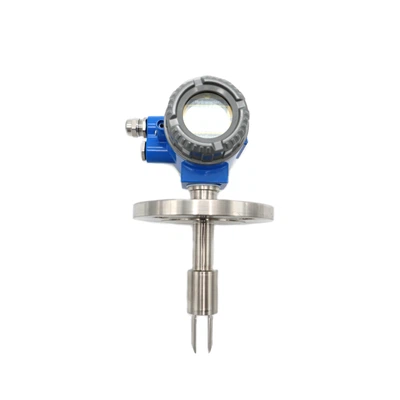
First off, you might be wondering why we care about viscometers in the first place. Well, viscosity is a crucial property in many industries. Whether it’s in the food and beverage industry to ensure the right texture of a sauce, in the oil and gas sector to assess the flow characteristics of crude oil, or in the pharmaceutical field to make sure medications have the proper consistency, measuring viscosity accurately is key. And that’s where Tuning Fork Viscometers come in.
Now, let’s focus on the tuning fork itself. The tuning fork in a Tuning Fork Viscometer is like the heart of the device. It vibrates at a certain frequency, and the way it vibrates is affected by the viscosity of the fluid it’s immersed in.
The quality factor, often denoted as Q, is a measure of how well the tuning fork can maintain its vibration. Think of it as a measure of how efficiently the tuning fork can store and transfer energy. A high – quality factor means that the tuning fork can vibrate for a longer time with less energy loss.
Mathematically, the quality factor is defined as the ratio of the energy stored in the vibrating system to the energy dissipated per cycle. In the case of our tuning fork, it’s related to how well it can keep vibrating in the fluid.
When the tuning fork is in a low – viscosity fluid, it can vibrate more freely. There’s less resistance from the fluid, so the energy loss is relatively small. This results in a higher quality factor. The tuning fork kind of just does its thing, vibrating steadily with minimal interference.
On the other hand, when the tuning fork is placed in a high – viscosity fluid, it’s like trying to move through thick molasses. The fluid resists the motion of the tuning fork, causing more energy to be dissipated. As a result, the quality factor drops. The tuning fork has a harder time maintaining its vibration, and its energy is quickly sapped away by the viscous drag of the fluid.
Why is the quality factor important in a Tuning Fork Viscometer? Well, it’s directly related to the accuracy of the viscosity measurement. A higher quality factor means that the tuning fork’s vibration is more stable and predictable. This allows for more precise measurements of the changes in the vibration characteristics, which are then used to calculate the viscosity of the fluid.
If the quality factor is too low, there can be a lot of noise and variability in the vibration data. This makes it harder to accurately determine the viscosity. The device might give inconsistent readings, which is a big no – no in industries where precision is everything.
Another aspect to consider is the design of the tuning fork itself. The shape, size, and material of the tuning fork can all affect the quality factor. For example, a tuning fork made of a material with low internal damping will generally have a higher quality factor. This is because low – damping materials allow the energy to be stored and transferred more efficiently within the tuning fork.
The shape and size also play a role. A well – designed tuning fork with an optimal geometry can minimize the energy losses due to fluid – solid interactions. For instance, a tuning fork with a simple and streamlined shape will experience less turbulence and drag when vibrating in the fluid, which helps to maintain a higher quality factor.
We’ve spent a lot of time in our R & D department working on optimizing the tuning forks for our Tuning Fork Viscometers. We test different materials, shapes, and sizes to find the combination that gives the best quality factor and, ultimately, the most accurate viscosity measurements.
One of the cool things about the quality factor is that it can also give us some information about the fluid’s properties beyond just viscosity. For example, if we notice an unexpected change in the quality factor over time during a measurement, it could indicate a change in the fluid’s composition, temperature, or the presence of contaminants.
Let’s say you’re measuring the viscosity of a chemical solution in an industrial process. If the quality factor starts to drop suddenly, it could mean that there’s an impurity in the solution that’s increasing its effective viscosity. Or, it could be that the temperature has changed, which can also impact the fluid’s behavior and the tuning fork’s vibration.
We’ve had customers who’ve used our Tuning Fork Viscometers and found these unexpected changes in the quality factor. In one case, a food processing company was using our viscometer to monitor the viscosity of a sauce. They noticed a gradual decrease in the quality factor over a few batches. Further investigation revealed that there was a problem with the incoming ingredients, which were causing a change in the sauce’s composition. Thanks to the information provided by the viscometer’s quality factor, they were able to catch the issue early and make the necessary adjustments to their production process.
In addition to the engineering and scientific aspects, the quality factor also has implications for the long – term performance of our Tuning Fork Viscometers. A tuning fork with a high and stable quality factor will generally have a longer lifespan. It can withstand the repeated vibrations and interactions with different fluids without deteriorating quickly.
This is important for our customers because it means less downtime for maintenance and replacement. They can rely on our viscometers to provide accurate measurements over an extended period, which helps to keep their operations running smoothly.
As a supplier, we’re always looking for ways to improve the quality factor of our tuning forks. We’re constantly researching new materials and manufacturing techniques to make the tuning forks more efficient and reliable. We also offer training and support to our customers so that they can get the most out of their Tuning Fork Viscometers and understand how to interpret the data related to the quality factor.
If you’re in an industry that requires accurate viscosity measurements, our Tuning Fork Viscometers could be a great solution for you. Our devices are designed to provide precise and reliable results, thanks in large part to the high – quality tuning forks with optimal quality factors.
We’re here to help you with any questions you might have about the technology, the applications, or the maintenance of the viscometers. Whether you’re a small – scale operation or a large industrial plant, we can work with you to find the right solution for your specific needs.

So, if you’re interested in learning more about our Tuning Fork Viscometers or want to discuss a potential purchase, don’t hesitate to reach out. We’re eager to have a chat and see how we can help you improve your viscosity measurement processes.
Tuning Fork Viscometer References:
- "Viscosity Measurement: Principles and Practice" by Ronald W. Rousseau
- "Fluid Mechanics" by Frank M. White
- Industry – specific research papers on the application of Tuning Fork Viscometers in various fields.
Shandong Aipuxin Automation Instrument Co., Ltd.
Shandong Aipuxin Automation Instrument Co., Ltd. is one of the most professional tuning fork viscometer manufacturers and suppliers in China, specialized in providing high quality customized service. We warmly welcome you to wholesale cheap tuning fork viscometer in stock here from our factory. For price consultation, contact us.
Address: Huigu Phase 1, Zhongnan High-tech Canal New City, Rencheng District, Jining City, Shandong Province
E-mail: aipuxin0124@gmail.com
WebSite: https://www.aipxin.com/
