When I first launched my hijab supply business three years ago, I thought I was just selling fabric and stitches. But in the three years since, I’ve sat across from hijab-wearing women from 12 different countries, listened to their stories of walking through grocery store parking lots at 7 a.m., and watched them adjust their scarves mid-conversation when a stranger gives a curious stare. What I’ve learned is that social norms for hijab-wearing women in public aren’t one-size-fits-all—they shift as much as the way a woman wears her scarf, from city sidewalks to small-town coffee shops, and they’re shaped less by rules than by the quiet, unspoken agreements we make every day. Hijab
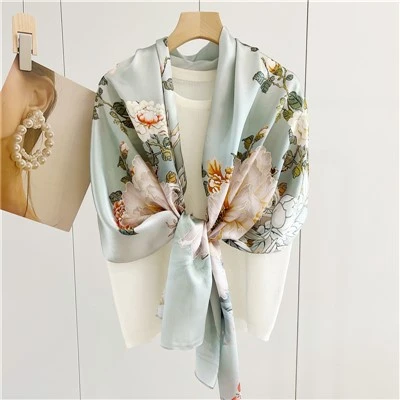
Let’s start with the small, daily spaces because that’s where most of these norms live. Take the grocery store, for example. I’ve seen a teen wearing a neon-pink satin hijab grab a cart without a second glance, her friend teasing her about forgetting to pick up her favorite cereal at the self-checkout. Nearby, a grandmother with a patterned cotton hijab stops to compare apple prices, her scarf tucked neatly under a flowy cardigan, and a cashier doesn’t comment on her head covering—they just ask, “Paper or plastic?” What’s the norm here? It’s simplicity: most people act like your hijab is just part of your outfit, not a statement. I’ve had a customer tell me she picks hijabs in neutral tones for grocery runs because it makes strangers more likely to hold the door, but I’ve also seen a woman wearing a sequined chiffon hijab get the same door hold, just laughed at a little when she dropped a bag of oranges. The line between “normal” and “noticeable” is blurry, and that’s the point. In small, routine public spaces, the unspoken norm is to see the person first, the hijab second—even when it’s hard, even when you’re tired.
But that norm changes when you step into a new space, something I learned when a regular customer of mine moved from Detroit to a rural town in the Midwest last year. She’d worn a lightweight jersey hijab to high school every day in Detroit, and no one blinked. When she started at her new community college, she told me, she felt like everyone was staring. “I wore my same black jersey hijab to the first day,” she said, “and a group of kids in the hallway started whispering like I was a ghost.” That’s when the norm shifted: in smaller, more insular communities, the unspoken rule often centers on “blending” a little, at least at first. She switched to a softer, less textured hijab for classes, and within a month, the whispers stopped. She still wears her bright satin ones to the downtown bakery on weekends, where the shop owner has worked there for 20 years and remembers her name. This isn’t about erasing identity—it’s about adapting to the rhythm of a space that doesn’t have as much practice with diverse looks. And over time, that norm softens too: when a neighbor knocked on her door last winter to bring soup, she was wearing a patterned silk hijab, and they didn’t say a word about it.
Then there are the unspoken norms between hijab-wearing women themselves, which are some of the most important ones I’ve observed as a supplier. At a recent trade show in Dubai, I sat with three women who all sell their own handmade hijabs, and we started talking about public moments. One told a story about waiting in line at a post office, and another woman in a bright blue hijab saw that hers was slipping as she bent over to grab her package. Without saying a word, the other woman adjusted her own hijab just enough to signal that the first woman needed help. “We don’t ask,” she said. “We just adjust. That’s the norm we have, better than any rule.” Another shared a time when she was at a concert a few months ago, standing on her tiptoes to see the stage, and her hijab got caught on the back of a stranger’s jacket. A girl in the row behind her, also wearing a hijab, handed her a hair tie without missing the song. “I learned that from my mom,” she said. “If someone’s hijab is in the way, you fix it. If someone looks uncomfortable pulling their scarf tight in the wind, you hold the door open a little longer. It’s not about religion—it’s about not making each other feel out of place in a crowd.” That’s the norm I strive to weave into every hijab I make: not just fabric, but the quiet, unspoken care that makes public spaces feel safe for everyone.
Of course, it’s not all quiet unspoken agreements. There are moments when norms get messy, when a hijab-wearing woman has to navigate a line that’s less clear. I remember a customer who told me she went to a job interview for a marketing position in New York City, and the hiring manager commented on her hijab at the start of the meeting: “That’s a really interesting pattern.” She told me she froze, because she didn’t know if the norm was to ignore it or talk about it. She ended up saying, “Thank you, I picked it because it goes with my favorite blazer,” and the interview moved on. She got the job. Another customer, a nurse who wears a lightweight cotton hijab that tucks easily under her scrubs, told me about working a night shift at a hospital a few years ago: a patient’s family member approached her and said, “I don’t think you should wear that in here, it’s not appropriate.” She told me she checked with her manager, who confirmed that her hijab was part of her uniform, and then spent 10 minutes explaining to the family member that it was part of who she was. The next day, the family member brought her a box of tea and apologized. These messy moments don’t break the norms—they redefine them, one conversation at a time. The unspoken rule here, I think, is that when someone comments on your hijab, you get to choose how to respond. You don’t owe anyone an explanation, but you do owe them a chance to understand, if you want.
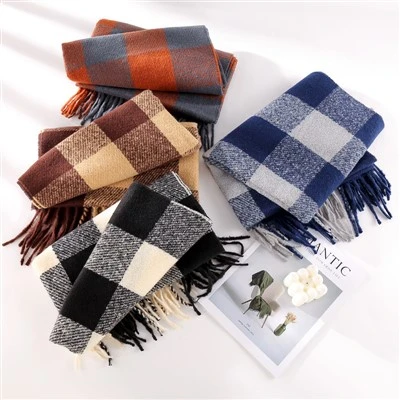
As a hijab supplier, this is why I don’t just send out hijabs with a care tag that says “wash in cold water.” My care tags have a little line that says “Wear them how you need to.” I’ve designed hijabs that are easy to tuck into scrubs for nurses, satin ones that hold their shape for job interviews, lightweight ones that don’t get caught in bike locks for students who commute to class. I’ve worked with hundreds of hijab-wearing women over the past three years, and every time, they tell me the same thing: the best norm is the one that lets them be themselves, whatever that looks like on any given day. That’s not to say there aren’t challenges—there are days when a stranger yells something from a car, or a barista makes a comment, or a room feels too small for a head covering that’s always on display. But there are also days when a stranger holds the door, or a kid draws a picture of your hijab at a grocery store, or a fellow hijab-wearing woman adjusts your scarf when the wind picks up. Those are the moments that shape the norms, the ones that tell us that being a hijab-wearing woman in public isn’t about fitting a rule—it’s about finding the space to be seen, fully, for who you are.
Solid Color Scarf If you’re a fellow hijab-wearing woman looking for pieces that work for your daily life—whether you’re grabbing groceries, walking to class, or heading to a big interview—I’d love to help. My team and I source soft, durable fabrics that hold up to whatever your day throws at you, and we work with you to find fits that feel right for your routine. There’s no pressure, no rules—just hijabs that let you focus on what matters: your work, your family, your friends, and all the little moments that make your days yours. Whether you need a single hijab or a bulk order for your business or organization, we can tailor our offerings to fit your needs. Reach out to our team to start a conversation about what you’re looking for, and let’s build something that works for you.
References
- Ahmed, L. (1992). Women and Gender in Islam: Historical Roots of a Modern Debate. Yale University Press.
- Eickelman, D. F. (1989). The Middle East: An Anthropological Approach. Prentice Hall.
- Mahmood, S. (2005). Politics of Piety: The Islamic Revival and the Feminist Subject. Princeton University Press.
- Abu-Lughod, L. (2013). Do Muslim Women Need Saving?. Harvard University Press.
- Gocek, F. M. (2007). Rethinking Empires: The Ottoman and Russian Cases. University of California Press.
Deqing Boliya Silk Co., Ltd.
Deqing Boliya Silk Co., Ltd. is one of the most professional hijab manufacturers and suppliers in China, featured by quality products and good service. Please rest assured to wholesale the newest hijab in stock here and get quotation from our factory. We also accept customized orders.
Address: Baibiao Industrial Zone, Xinshi Town, Deqing County, Zhejiang Province, China
E-mail: boliya@boliyasilk.com
WebSite: https://www.boliyasilk.com/
