Hey everyone, let’s cut to the chase: if you’re a farmer, you didn’t get into this gig to guess when to water crops or cross your fingers that pests won’t blow through your field. I’ve spent the last few years working with farmers across the Midwest and parts of Canada, selling our agricultural monitoring systems — and one question pops up every single time: “Does this stuff actually make me more money?” Agricultural Monitoring System
Short answer? Yeah, it does. Like, a lot. But let’s not just stop at a one-liner — let’s break down exactly how our system turns those day-to-day farm headaches into cold, hard profit, no fancy jargon or sales fluff required.
First, let’s get real about what farming was like before tools like ours existed. I’ve sat in on enough dusty farm kitchen tables to hear the same stories: a guy I know in Iowa spent three years overwatering his corn because he relied on a rain gauge that told him total rainfall for the month, not that his field’s east side was bone-dry while the west side was drowning. Another farmer in Ontario lost 12 acres of soybeans because he checked his crops once a week, and by the time he spotted the aphid infestation, it was too late to save half the field. Old-school farming is all about average — average rainfall, average pest risk, average yield — but averages don’t account for the 10% of your field that’s actually way drier or the aphid hot spot that’s hidden in the rows you don’t walk every Sunday.
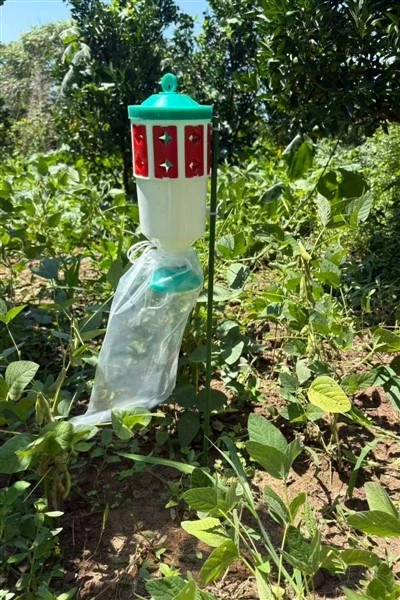
That’s where our system comes in. Let’s call it an Ag Monitoring System (AMS) for short, because no one wants to say the whole name ten times a day. Here’s how it works: we place small, weatherproof sensors throughout your fields (usually one every 2 to 5 acres, depending on how variable your land is — hilly vs. flat, sandy vs. clay soil). These sensors measure real-time soil moisture, nutrient levels, temperature, even pest pressure for common bugs like corn rootworms or soybean aphids. The data gets sent to a simple app — no fancy training needed, I promise — that updates every hour and flags you when something’s off.
So how does that translate to profit? Let’s start with the biggest cost for most farmers: water and fertilizers. Fertilizer prices have been all over the place lately, right? Last year I talked to a farmer who spent $18,000 on nitrogen for his corn, but he overapplied by 15% because he thought “more is better.” Using our system, he could have seen exactly how much nitrogen each part of his field actually needed — the north field only needed 80% of the recommended rate, while the south field needed 10%. That would have saved him $2,700 straight up. And it’s not just fertilizer: water bills add up fast too, especially if you’re on a well or pay for irrigation by the gallon. Our sensors eliminate guesswork on watering — no more irrigating the whole field because one spot is dry. The Iowa guy I mentioned earlier switched to our system, cut his water use by 22%, and saved over $1,200 last season alone. That’s not a small win for a farm with 1,000 acres.
Wait, but what about the “big ticket” stuff — yield loss from pests or weather? That’s where our system’s real superpower kicks in: early detection. Let’s say an early frost is heading your way. Our temperature sensors will ping your app 48 hours before it hits, and even tell you exactly which parts of your field are most at risk (low-lying areas get colder first, right? The sensors in those spots will drop faster than the hilltop ones). So you don’t waste time covering the entire field — just the 10 acres that’ll actually be damaged. I had a wheat farmer in Kansas use that last spring; he saved $15,000 worth of wheat that would’ve been killed by the frost because he only needed to cover 20 acres instead of 200. Same thing with pests: the app sends an alert within 24 hours of aphid activity, so you can treat only the affected rows, not the whole field. The Ontario soybean farmer who lost 12 acres? If he’d had our system, he would’ve treated the 2 acres where aphids showed up first, saved all his other acres, and only spent $300 on pesticide instead of $2,000 to treat the entire field (which still would’ve lost half its yield anyway).
And let’s not forget about efficiency — the stuff that lets you get more done without working 18-hour days. Our system cuts down on time spent driving around checking fields. Before, a farmer might drive 100 miles a day just to eyeball every acre. Now? You pull out your app on the couch after dinner, see that only the west side has low moisture, and only head out there instead of the whole farm. That’s less wear and tear on your truck (saves on gas and maintenance) and more time to focus on other parts of your operation — like negotiating better grain prices or planning next year’s crop. One corn-soybean farmer in Illinois told me that using our system saved him about 10 hours a week during planting and growing seasons. Over 6 months, that’s 260 hours of time he could’ve spent working on the business, not in it. He estimated that freed-up time netted him an extra $4,000 in better contract pricing for his grain.
But wait — I know what some of you are thinking. “This sounds great, but how much does it cost? Is it worth the upfront investment?” Let’s get real about numbers. Our system’s pricing is based on the size of your farm, but for a 500-acre operation, it’s usually around $1,500 a year, plus a one-time sensor setup fee of $500. Wait, that’s it? Let’s do the math. Take the Iowa farmer I mentioned earlier: he saved $2,700 on fertilizer and $1,200 on water, plus avoided $5,000 in pest-related yield loss. That’s $8,900 in extra profit — minus the $2,000 he spent on the system, and he’s still up $6,900. That’s a return on investment (ROI) of over 345% in one year. No, that’s not a typo. I’ve seen that same math play out with dozens of farmers. Another example: a 200-acre vegetable farm in Ohio used our system to cut pesticide use by 30% and boost yields by 12% because they fixed nutrient levels in their tomato rows. They spent $1,000 on the system, made an extra $18,000 from higher yields and lower input costs. ROI that year was 1,700%. And as sensors get cheaper and the app becomes more intuitive, that number only goes up.
Now, I’m not gonna sit here and say our system solves every farm problem. If you don’t know how to read data (though we do have free 1-hour onboarding sessions, no charge), or if you just ignore the alerts, it won’t do a thing. But for most farmers who are tired of guessing and losing money to avoidable mistakes, it’s a no-brainer. I’ve seen farmers go from breaking even on a bad year to turning a $50,000 profit, all because they stopped wasting money on overwatering, overfertilizing, and treating whole fields when only a small part is affected.
Here’s the thing: farming isn’t what it used to be 20 years ago. You can’t rely on grandpa’s old methods anymore — weather patterns are weirder, input costs are volatile, grain prices fluctuate more than ever. The farmers who are making money now are the ones who use data, not guesses. Our AMS is just a tool to give you that data, straight to your phone, so you can make better decisions faster.

If you’re curious to see how this works for your specific farm, I’d be happy to hop on a quick call and walk through it with you. No sales pitch, just a real talk about your numbers, your fields, and how we can help you stop leaving money on the table. Just reach out, and we can set up a time that works for you, no pressure at all.
Solar Insecticidal Lamp References:
- USDA Economic Research Service. (2022). Agricultural Technology Adoption and Profitability: Evidence from Precision Agriculture Tools.
- Food and Agriculture Organization of the United Nations. (2021). The Impact of Precision Farming Systems on Smallholder and Commercial Farm Profitability.
- Journal of Agricultural and Resource Economics. (2023). Real-Time Soil Monitoring and Crop Input Cost Reduction: A Meta-Analysis.
Sichuan Ruijinte Technology Co., Ltd.
As one of the most professional agricultural monitoring system manufacturers in China, we have world-leading production equipment and strong manufacturing capabilities. Please rest assured to wholesale high quality agricultural monitoring system at competitive price from our factory. Customized orders are welcome.
Address: No. 616, 6th Floor, Building 1, No. 8, Tianjiu North Lane, High-tech Zone, Chengdu
E-mail: glock@rjt-agri.com
WebSite: https://www.rjtagri.com/
