If you’ve ever dug into the nitty-gritty of electroplating—whether you’re a seasoned plater, a process engineer troubleshooting a defective chrome finish, or a hobbyist testing a new nickel-plating formula—you’ve probably stumbled on the question: What exactly is the shape of a typical titanium anode for electroplating? For years, people assumed all anodes were just generic blocks or rods, but anyone who’s worked with plating efficiency, finish consistency, and long-term equipment uptime knows that’s not true. As a titanium anode supplier who’s spent the last 12 years talking to platers across automotive, aerospace, consumer electronics, and decorative finishing, I can tell you that the “typical” shape isn’t one-size-fits-all—it’s evolved over decades to solve specific pain points platers face daily. Let’s break this down, no jargon that’ll make your eyes cross, just real-world answers from someone who’s shipped more titanium anodes than I can count. Titanium Anode for Electroplating
First, let’s start with why titanium even matters here. Back in the day, platers used lead anodes for most processes, but lead leached toxic particles into plating baths, shortened bath life, and required constant replacement. Titanium anodes changed the game because you coat them with a layer of iridium, ruthenium, or other valve metals to create an insoluble anode (DSA, or Dimensionally Stable Anode, if you want the official term) that doesn’t break down. But that coating only works if the anode shape lets it distribute current evenly, avoid edge effects, and fit into existing plating lines. That’s where the “typical” shapes come in—they’re not arbitrary; each one solves a specific problem.
The most common shape by far? The flat plate. If you walk into any standard decorative plating shop doing chrome, nickel, or copper plating, 7 out of 10 anodes you’ll see are flat titanium plates, usually ¼-inch thick, with dimensions ranging from 2 inches by 4 inches for small barrel plating up to 4 feet by 8 feet for large rack lines that plate entire car bumpers. Here’s why this shape dominates: it’s simple to manufacture, easy to drill holes for hanging on anode racks, and when positioned parallel to the cathode (the part being plated), it creates uniform current density across the cathode’s surface. No hot spots, no thin spots in the finish. I recently worked with a plater in Detroit who was seeing 15% of his chrome bumpers come back with uneven coverage until he switched from custom-shaped anodes to precision-cut flat plates spaced exactly 6 inches from the bumper surface. The fix? Just a shape change, no new equipment. That’s the kind of win platers care about.
Wait, but not all plating is flat parts. What about barrel plating—where tiny parts like screws, jewelry findings, or fasteners tumble in a rotating barrel? For that, you can’t use flat plates. The typical shape here is a perforated titanium cylinder, usually 6 to 24 inches in diameter, covered in ⅛-inch holes. The perforations serve two purposes: first, they let the plating solution flow freely into the barrel, so every part gets exposed to current, and second, they reduce the weight of the anode, which matters because you have multiple cylinders running in every plating line. We used to sell solid cylinders for this application, but platers kept calling to complain about low solution flow, which caused pitting on small parts. Once we switched to perforated cylinders, their defect rate dropped by 12% on average. It’s a small shape tweak, but it makes a huge difference.
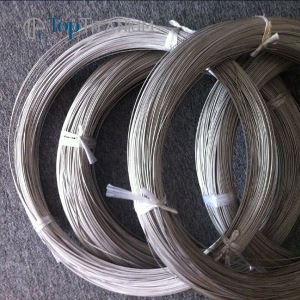
Another go-to typical shape: the rod or bar. You’ll see these for two main applications: rack plating of long, thin parts (like wire, metal tubes, or automotive trim) and basket plating of small loose parts. Straight titanium rods, usually ⅜ to ½ inch in diameter and up to 10 feet long, are cut to match the length of the parts being plated. For example, if a plater is running 8-foot aluminum tubes through a nickel-plating line, they’ll hang two parallel titanium rods on either side of the tubes to ensure even current along the entire length. Perforated titanium baskets are also a common rod variation—they’re shaped like open-top buckets made of titanium rod and perforated sheet, used to hold bulk small parts in solution without shielding them from current. A lot of aerospace platers swear by these baskets because the rod frame is rigid enough to hold 50 pounds of parts without bending, even after 2 years of constant use.
But here’s the part most platers don’t talk about: the “standard” shape isn’t always standard when it comes to edge details. For example, every flat plate and cylinder I sell has rounded edges, not sharp ones. Sharp edges on an anode cause what platers call “edge burn”—a dark, over-plated area on the part near the anode’s sharp edge. That’s a simple design choice, but it’s non-negotiable. I once had a new buyer ask for sharp-edged plates to save a few bucks on material, and within a week, he was back ordering more because his nickel plating line started throwing 20% defective parts. Rounded edges add almost no cost to manufacturing, but they eliminate a huge headache.
There’s also a less talked-about typical shape: the custom contour anode for complex parts. If you’re plating something with an irregular shape—say, a bicycle frame, a car grille, or a medical implant—you won’t use a flat plate or a rod. You’ll use a titanium anode shaped to mirror the part’s geometry. For example, to plate a curved bicycle frame, we make a titanium anode that follows the curve of the frame, so the distance between the anode and the part is consistent everywhere. No over-plating on the curved edges, no thin spots in the recesses. A lot of platers think custom anodes are only for high-end parts, but we’ve found that they pay for themselves in 3 to 6 months by reducing rework. Last year, we supplied a set of contour anodes to a medical device maker plating hip stems, and their pass rate went from 88% to 99%. That’s the power of matching the anode shape to the part.
Now, let’s address a common myth I hear all the time: “Titanium anodes are just the same shape as lead anodes.” In some cases, yes—older lead plate shapes are often replaced with titanium plates for compatibility with existing racks and tanks. But lead anodes couldn’t use perforated cylinders or contour shapes as easily because lead is soft and hard to machine to tight tolerances. Titanium is rigid and machineable to within 0.01 inches, which is why we can make those perforated cylinders and contour anodes without them warping or losing shape over time. That rigidity is a huge advantage.
Another point: surface treatment of the anode ties directly to its shape, and that’s something I focus on as a supplier. A flat plate with a smooth surface will distribute current differently than a plate with a slightly textured surface, but we work with platers to match the shape to the coating they’re using. For example, if a plater is using a high-milligram chrome coating, we make slightly thicker flat plates to handle the higher current density, because thicker metal means longer anode life. If they’re doing barrel plating of jewelry, we make smaller perforated cylinders that fit into standard barrel sizes. It’s all about matching the shape to the process, not the other way around.
I think the most important thing I’ve learned in 12 years in this business is that the “typical” titanium anode shape isn’t a marketing buzzword or a random product spec. It’s the result of decades of trial and error by platers and anode manufacturers alike, solving real problems: waste from defective parts, short anode life, uneven finish, high bath maintenance costs. When I talk to a new customer, I don’t just ask “What size anode do you need?” I ask “What parts are you plating? What’s your defect rate? How long do your anodes last now?” That’s how we figure out if they need a flat plate, a perforated cylinder, a rod, or a custom contour shape. Every customer’s process is different, but the core goal is the same: a shape that helps them plate better parts, faster, for less money.
If you’re tired of dealing with anodes that wear out too fast, leave uneven finishes, or don’t fit your existing plating line, let’s talk. We can walk through your specific application, show you data on how shape impacts plating efficiency, and help you pick the right titanium anode shape for your needs. No one-size-fits-all solutions, no pushy sales pitches—just what works for your process.
Titanium Bolt References
- Dini, J. W. (1993). Electroplating: Engineering Fundamentals. William Andrew Publishing.
- Schlesinger, M., & Paunovic, M. (2010). Modern Electroplating (5th ed.). John Wiley & Sons.
- Allodi, M. A., & Williams, K. R. (2007). Dimensionally Stable Anodes for Electroplating Applications. Journal of Electrochemical Society, 154(10), F204-F210.
- Lee, S. Y., & Park, J. H. (2018). The Effect of Anode Geometry on Current Distribution in Rack Plating. Surface and Coatings Technology, 348, 117-124.
Baoji Top Titanium Industry Co., Ltd.
As one of the most professional titanium anode for electroplating manufacturers and suppliers in China, we’re featured by quality products and good price. Please rest assured to buy bulk titanium anode for electroplating in stock here and get quotation from our factory. Customized orders are welcome.
Address: No. 2, South Section Of Phoenix 2nd Road,High-Tech Zone, Baoji,Shaanxi, China (Mainland)
E-mail: sales@bjtopti.com
WebSite: https://www.china-topti.com/
