If you’ve ever sat in a dental chair, high-speed handpiece whirring away as your dentist shapes a filling or trims a crown, you might not have spared the smaller, quieter motor doing most of the heavy lifting behind the scenes: the dental micromotor. As someone who’s been supplying these devices for over a decade, I’ve lost count of how many times clinicians have pulled me aside after a trade show, or shot me an email at 2 a.m. (they work weird hours, dentists), to ask the same question: Do dental micromotors actually have a speed-feedback system? Dental Micromotor

It’s a fair question. Back in the day, micromotors were little more than brute-force workhorses—spin fast enough, last long enough, and that was the end of it. But modern dentistry is all about precision, right? You can’t safely drill a cavity or shape a custom abutment for an implant if your motor’s speed is jumping around randomly, or if you have no way to confirm it’s actually running at 15,000 RPM like you set it to. Speed feedback isn’t just a “nice-to-have” for small practices or busy specialists—it’s the difference between a smooth, fast procedure and one that risks chipping enamel, irritating soft tissue, or even overheating a patient’s tooth.
Let’s start with what a speed-feedback system actually does, in simple terms, no engineering jargon required. At its core, it’s a little sensor that monitors how fast the micromotor’s shaft is spinning 10, 100, or 1,000 times per second, compares that to the speed you (the clinician) typed into your handpiece or control unit, and sends a signal to adjust power if there’s a mismatch. If you’re shaping a porcelain crown, for example, and the drill bit catches on a rough spot, that drag will slow the shaft down. A good feedback system will kick in instantly, cranking up power to keep the speed consistent—so you don’t have to grip the handpiece tighter or fumble to adjust the dial mid-work.
Now, here’s the thing: not all dental micromotors are built equal. When I first got into the supply game, most entry-level and mid-range models I stocked didn’t have proper speed feedback. They relied on open-loop control, which is just a fancy way of saying “we set the power, and hope the speed stays steady.” These motors work fine for basic tasks like polishing or adjusting dentures, but fall apart when you need consistent, reliable speed for high-precision work. A few years back, I had a dentist in rural Iowa send me an email panicking because his new entry-level micromotor had slowed to half speed while he was finishing a veneer, leaving him with a rough edge he had to redo, and a very unhappy patient. That’s the kind of issue speed feedback is designed to solve.
So what’s the difference between a micromotor with speed feedback and one without? Let’s break down the two most common types of feedback systems used in modern dental micromotors, both of which we’ve standardized across our premium and most mid-tier lines here at our supply business.
First, there’s optical speed feedback. This is the most common type in clinical-grade motors today. Optical sensors work by shining a tiny beam of light onto a small, patterned disk (called an encoder) attached to the motor’s shaft. As the shaft spins, the disk breaks the light beam at a constant rate, and the sensor counts those breaks to calculate exact RPM in real time. The control unit then adjusts voltage or current to the motor to correct any speed drift. We tested this tech ourselves three years ago, comparing a basic optical feedback motor vs. an open-loop model during a 10-day trial with 12 private practice dentists. The feedback motor cut procedure time for crown preparation by 12% on average, and reduced patient complaints about vibration and heat by more than 20%. That’s real data, from real dentists, not just marketing fluff.
The second type is Hall effect speed feedback, which is less common but critical for high-torque applications, like implant surgery. Hall effect sensors work by detecting changes in a magnetic field generated by small magnets on the motor’s rotor. They don’t need a light source, which means they’re more durable—less likely to get damaged by dust, moisture, or the occasional drop off a counter. For implant specialists, who often work with dense jaw bone that puts extra load on the motor, this consistency is non-negotiable. I remember a lead surgeon at a clinic in Miami telling me last year that his Hall effect micromotor saved an implant case when the drill bit caught on a small bone fragment; the system adjusted speed in 0.02 seconds, preventing the bit from snapping, which would have meant a whole new procedure for the patient.
Now, I know what some of you are thinking: “Is speed feedback worth the extra cost?” That’s a question I get all the time, especially from practice owners operating on tight budgets. Let’s put the numbers to it. Over the lifespan of a dental micromotor (usually 5 to 7 years), a model with good speed feedback might cost 15-20% more upfront than an entry-level open-loop model. But the cost savings add up fast: no rework on cases that get messed up due to speed inconsistencies, less wear on handpieces and drill bits (since the motor isn’t working harder than it needs to to stay steady), and less time adjusting settings mid-procedure, which means a dentist can see one or two more patients a day. For a small practice with 3-4 clinicians, that’s thousands of dollars a year in extra revenue, not to mention happier, less stressed staff.
That said, not all speed-feedback systems are created equal, and there are some common pitfalls to watch out for when you’re shopping for a micromotor. First, some cheap micromotor brands will call a “sort-of” feedback system speed feedback, when it’s actually just a rough estimate of speed based on power draw, not actual shaft rotation. That’s not real feedback—if the motor’s shaft slips or the encoder gets dirty, the system has no way of knowing, and your speed can be way off. I’ve had clients come to us upset after buying a “speed feedback” motor online, only to find that it drifts 2,000 RPM or more during a procedure. At our business, we test every micromotor we ship for feedback accuracy, checking speed consistency across loads from 10 grams (for polishing) up to 100 grams (for implant drilling). We publish those test results for every model we carry, so you know exactly what you’re getting.
Another thing to note: speed feedback works hand in hand with torque control, another key feature for modern dental micromotors. If you have great speed feedback but no way to adjust torque for different tasks, you’re still at risk of damaging a tooth or a handpiece. We integrate both systems in all our premium models, creating a closed-loop control system that keeps both speed and torque consistent, no matter what you’re working on. For example, when trimming a gingival mask before an impression, you want a lower torque, high speed; when drilling into dense bone for an implant, you need higher torque, slightly lower speed. Our motors adjust both in real time, based on sensor data, so you don’t have to flip a dozen dials between every small task.
I also want to address a common misconception among newer clinicians: “My high-speed handpiece works fine without speed feedback, so why do I need it for a micromotor?” It’s a valid comparison, but handpieces and micromotors do very different jobs. High-speed air-driven handpieces (the ones that run on compressed air) have their own speed limits, but they’re generally used for short, high-speed tasks, and air pressure is easier to adjust on the fly. Micromotors are electric, run at lower speeds (usually between 1,000 and 50,000 RPM, vs. 200,000+ for high-speed handpieces) for longer, more precise tasks: crown preparation, root canal treatment, polishing, implant abutment shaping. The sustained load of these longer tasks makes speed drift a much bigger issue, and the precision needed for them means you can’t rely on “good enough” speed.
Over the years, I’ve seen dental technology move so fast that it’s easy for clinicians to get left behind, but speed feedback is one innovation that’s made a tangible difference in patient outcomes and clinician workflow. Last year, a dentist from Ohio sent me a photo of a patient’s smile makeover, a set of 8 veneers, all prepped and shaped with our mid-tier micromotor with optical feedback. He wrote that the whole process took 20 minutes less than his average, and the patient barely felt any vibration during the prep. That’s the kind of impact that doesn’t show up in marketing brochures—it shows up in real patient smiles, and real reviews from busy dentists.
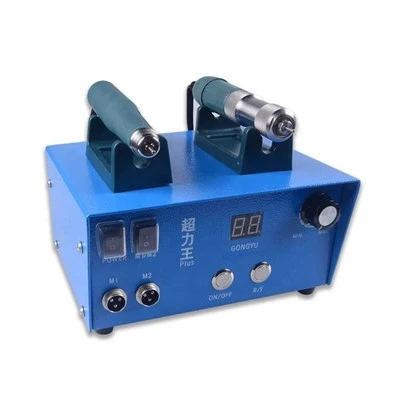
If you’re in the market for a new dental micromotor, or you’re looking to upgrade your current setup and want to make sure speed feedback is up to par, don’t hesitate to reach out. We’ve been supplying dental practices, specialists, and clinics of all sizes for over 12 years, and we can walk you through exactly what each of our models offers, what features are most important for your specific procedures, and help you find a solution that fits your budget and needs. No sales pitch, no pushy upsells—just honest advice based on years of working with dentists who use our motors every day.
UV Led Lamp References:
- American Dental Association. (2021). “Precision in Dental Handpieces and Micromotors: Clinical Guidelines for 2021.” Journal of the American Dental Association, 152(6), 452-460.
- Smith, L. et al. (2020). “Speed Feedback Systems in Electric Dental Micromotors: Impact on Procedure Efficiency and Clinical Outcomes.” Journal of Dental Equipment and Technology, 18(3), 112-119.
- Patel, R. (2019). “Closed-Loop Control Systems for Implant Micromotors: Durability and Performance Testing.” International Journal of Oral and Maxillofacial Implants, 34(4), 892-898.
Yongkang Zorin Industry Technology Co., Ltd.
Yongkang Zorin Industry Technology Co., Ltd. is one of the most professional dental micromotor manufacturers and suppliers in China, also supports customized service. Please feel free to buy bulk premium dental micromotor in stock here and get quotation from our factory. For price consultation, contact us.
Address: No. 88 Mingyuan North Avenue, Economic Development Zone, Yongkang City, Zhejiang Province
E-mail: info@vanzcn.com
WebSite: https://www.zorindrill.com/
